

If your dentist tells you it’s time to see an endodontist, what does that really mean for you? Is it just another name for a dentist who does root canals, or is there a real difference in the kind of care you’re getting? The ways endodontics is different from general dentistry come down to training, diagnosis, and the part of the tooth each one treats. Once you see where those paths split, it gets a lot easier to understand why your dentist may send you to a specialist instead of handling everything in one office.
Endodontists Focus on the Inside of the Tooth

General dentistry covers a wide range of care. Your regular dentist checks for cavities, treats gum issues, places fillings, and helps keep your mouth healthy overall. Endodontics is much narrower. It focuses on the inside of the tooth, especially the pulp, which contains the nerve and blood supply.
When the pulp gets infected, inflamed, or damaged, the problem goes deeper than a routine filling can fix. You might have intense pain, lingering sensitivity, swelling, or pressure when you bite down. In those cases, an endodontist looks specifically at what’s happening inside the root canals and surrounding tissues.
So while a general dentist handles many types of dental care, an endodontist works in one very specific area of treatment. It’s a different level of attention on a different part of the tooth. If you’ve ever wondered why you’d be sent to one instead of staying with your regular dentist, this is one of the clearest reasons.
Endodontists Get Advanced Training After Dental School
Both providers go through dental school, but they don’t stop at the same point. A general dentist qualifies to practice broad dental care after earning a dental degree and meeting state licensure requirements. An endodontist has to complete that same path first, then go through added specialty training focused on the inside of the tooth.
What Education a General Dentist Needs
A general dentist can begin practicing after completing the standard requirements for dental licensure in the U.S. Those requirements include:
- Graduation from a CODA-accredited dental program
- A D.D.S. or D.M.D. degree
- A passing score on the required written examination
- A passing clinical assessment required by the state dental board
- A state dental license
Some general dentists also complete an extra residency, such as a General Practice Residency or Advanced Education in General Dentistry program, but that’s not required for every general dentist.
What Education an Endodontist Needs
An endodontist has to qualify as a dentist first, then complete specialty training in endodontics. In the U.S., that path includes:
- Graduation from a CODA-accredited dental program
- A D.D.S. or D.M.D. degree
- A dental license
- Successful completion of a CODA-accredited advanced education program in endodontics
- Specialty training centered on root canal systems, pulp disease, dental trauma, diagnosis of tooth pain, and retreatment cases
Board certification is also available through the American Board of Endodontics, but it’s voluntary, not required for every practicing endodontist. To earn it, the endodontist must complete a CODA-accredited endodontic program and pass three separate examinations.
Endodontists Handle Complex Root Canal Cases More Often
Many general dentists will perform root canals. But they don’t do these procedures day in and day out like an endodontist does. A general dentist typically does about two root canals a week. An endodontist, by comparison, averages about 25 a week, according to the American Association of Endodontists.
You’ve heard the phrase “practice makes perfect.” Because endodontists have far more experience with root canal treatment, they see complex anatomy, difficult infections, and retreatment cases much more regularly. That repeated experience gives them a deeper working knowledge of how to handle problems inside the tooth.
Endodontists Also Treat Dental Injuries
Endodontists perform a lot of root canals, but that’s not the only type of care they provide. They also specialize in treating complex dental injuries, including cracked teeth, dislodged teeth, and teeth that have been pushed deeper into the socket or partially knocked out.
These injuries often involve damage inside the tooth, the root, or the tissues around it, which requires a level of diagnosis and treatment a general dentist may not be able to provide. It’s for this reason that many general dentists will refer patients with traumatic tooth injuries to an endodontist for specialized care after an accident or blow to the mouth.
Endodontists Use Advanced Technologies
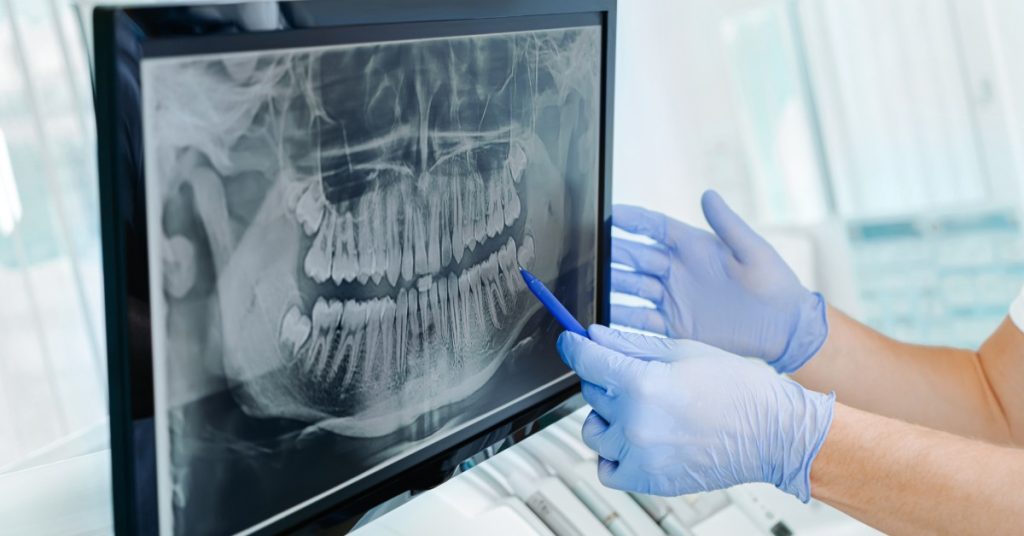
A general dentist does use quite a bit of technology in everyday care. This includes digital X-rays, intraoral cameras, and standard diagnostic tools used during exams and routine treatment. But endodontists use more advanced technology to evaluate and treat problems deep inside the tooth with a much higher level of detail.
Some of the technology they may use includes:
- Cone Beam CT (CBCT): This is a 3D scan that shows the tooth, roots, canals, and surrounding bone from multiple angles. It helps spot hidden infection, extra canals, root fractures, and other problems a flat X-ray may not fully show.
- Dental Operating Microscope: This gives the endodontist a highly magnified view of the inside of the tooth during treatment. It helps them locate tiny canals, see fine details, and work more precisely in a very small space.
- Digital Radiographs: These X-rays are used before, during, and after treatment to check the shape of the roots, measure canal length, and confirm the canals have been fully treated.
- Electronic Apex Locators: These tools help measure the inside of the root canal and show where the root ends. That helps the endodontist clean and treat the canal to the proper depth.
- Ultrasonic Instruments: These small instruments use vibration to help remove blockages, clean around delicate areas, and assist with retreatment cases where old filling material or posts need to be removed.
This kind of technology gives endodontists a clearer view of what’s happening and helps them treat root canal problems with more precision.
More Different Than You’d Think
You should now have a better understanding of how endodontics is different from general dentistry. Both your general dentist and an endodontist treat dental problems and work to protect your natural teeth.
The main difference is that your general dentist is, as the name suggests, focused on more general dental care like cleanings, fillings, and routine exams. An endodontist specializes in one specific part of the tooth, the pulp, and that focus is reflected in their more focused training and deeper expertise in treating problems inside the tooth.
Typically, if you need the care of an endodontist, your general dentist will refer you to one. From there, you can look around for a practice with the right experience for your needs. Commonwealth Endodontics is one option worth considering if you’re located in central Virginia. We’re a team of root canal dentists that can assist with root canals and other procedures related to the inside of the tooth. We also offer 24/7 emergency care for dental emergencies, including traumatic tooth injury. If you need our care, contact us today, and we can set up an appointment to discuss your treatment options.