

You just noticed a crack in your tooth, and it has you worried. Is it something that needs immediate attention? Or is it a surface mark that doesn’t need treatment at all? There are different types of tooth cracks, and they don’t all point to the same kind of damage. Some are serious. Others stay on the outer enamel and don’t reach the living tissue inside the tooth. To help you sort out what you have and whether you need care, here’s a simple guide to the cracks dentists look for.
Craze Lines

Craze lines are tiny, shallow cracks that only affect the outer layer of the tooth, which is the enamel. They don’t go deep, and they don’t reach the inner structure of the tooth.
What This Means for Your Health
Craze lines are so common that most adults have them without knowing it. They show up from years of normal chewing, temperature shifts, or even grinding your teeth at night. A craze line won’t cause pain, won’t spread to the root, and won’t put the tooth at risk. Your dentist will probably spot one during a routine visit and leave it alone entirely.
No treatment is needed in most situations. If you notice some staining along the line, a cosmetic fix is an option, but that’s a personal call, not a dental necessity.
Fractured Cusp
A fractured cusp happens when a piece of the tooth’s chewing surface breaks off or pulls away. It usually shows up around a dental filling, where the tooth structure has already been altered.
What This Means for Your Health
The good news is that this type of fracture rarely reaches the pulp, which is the soft inner tissue that houses the nerves and blood vessels. Pain is sometimes present, but it’s often mild. Since the pulp is usually unaffected, a crown is typically enough to restore the tooth and protect what’s left of the structure. If you notice a piece of your tooth has chipped away near a filling, get it looked at soon. Leaving a fractured cusp without a crown puts the remaining tooth at risk of further breaking.
Cracked Tooth
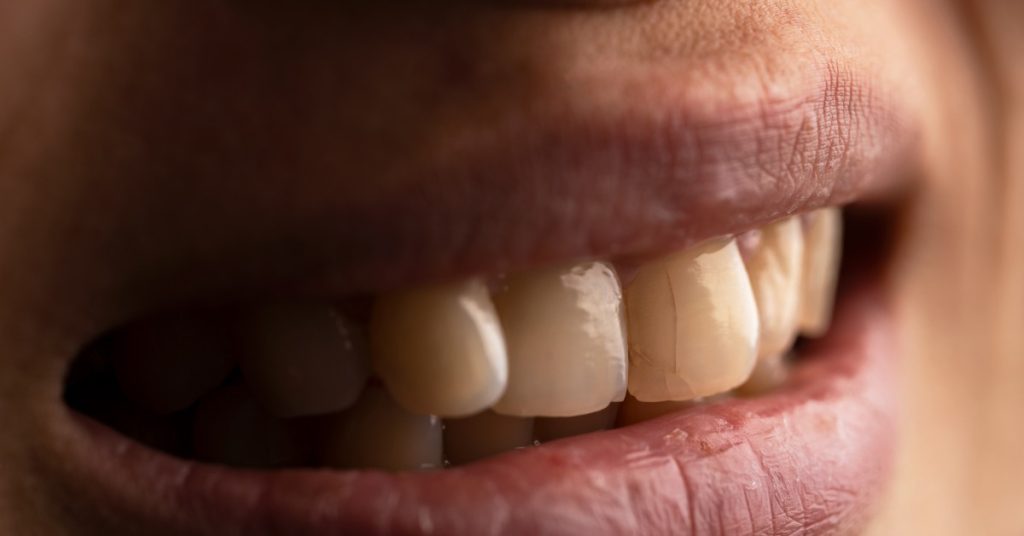
A cracked tooth is what most people picture when they hear the phrase. The crack runs vertically from the chewing surface downward, sometimes toward the root. Unlike a fractured cusp, the crack doesn’t remove a piece of the tooth. The tooth stays whole, but the crack runs through it.
What This Means for Your Health
This one depends on how far the crack has traveled. If it hasn’t reached the pulp, a crown can protect the tooth and stop the crack from spreading. If the crack has gone deeper and the pulp is affected, a root canal becomes necessary before placing the crown.
What makes a cracked tooth tricky is the pain pattern. You’ll often feel a sharp sting when you bite down, followed by quick relief when you release. That release-and-relief pattern is a strong indicator that something is cracked rather than decayed. If that’s happening to you, don’t wait on it. A crack that isn’t treated will eventually reach a point where saving the tooth isn’t possible.
Split Tooth
A split tooth is what happens when a cracked tooth goes untreated for too long. The crack has now divided the tooth into two distinct pieces. In some situations, the split follows a line that allows part of the tooth to be saved. In others, the entire tooth has to come out.
What This Means for Your Health
A split tooth is a dental emergency. By the time a tooth has split, the damage has almost always reached the pulp. Pain at this stage is significant, and infection becomes a real concern if bacteria have entered through the crack.
Whether any portion of the tooth can be saved depends on where the split sits and how far it extends into the root. Your dentist or endodontist will evaluate the split and give you an honest picture of what’s salvageable. If you’re in pain and suspect a split tooth, don’t try to wait it out until a regular appointment opens up.
Vertical Root Fracture
A vertical root fracture starts at the root and works its way upward toward the chewing surface. Because it begins below the gumline, it often goes undetected for a long time.
What This Means for Your Health
This is one of the harder fractures to catch early. Symptoms can be subtle: mild discomfort, some swelling near the gum, or an abscess that keeps coming back. By the time it’s diagnosed, the damage is often advanced.
Vertical root fractures most frequently affect teeth that have already had root canals. The absence of nerve tissue means there’s no sharp pain to signal that something is wrong, so the fracture develops quietly. In most situations, the tooth can’t be saved and needs to be extracted. If only part of the root is affected, an endodontist may be able to remove that section while preserving the rest of the tooth, though this isn’t always possible.
Gum Line Fracture
A gum line fracture is a crack that runs horizontally across the tooth at or just below where the gum meets the tooth surface. It doesn’t follow the same vertical path as most other crack types. Instead, it cuts across the tooth near the base of the visible crown.
What This Means for Your Health
Whether this fracture is treatable depends almost entirely on how far below the gumline it sits. A crack that’s right at the gumline gives your dentist or endodontist something to work with. One that extends further down into the root is a much harder situation, and extraction is often the only realistic path forward.
Pain is common with this type of fracture, and the area around the crack can become tender to the touch. Because the fracture sits so close to the gum tissue, infection can develop quickly if bacteria get into the crack. If you’re noticing consistent soreness near the base of a specific tooth, get it checked out sooner rather than later. A gum line fracture won’t resolve on its own, and waiting gives the crack more opportunity to travel deeper into the root.
What’s Next
There are different types of tooth cracks, and each one signals something different for your dental health. Some cracks, like craze lines, are normal and won’t threaten the tooth at all. Others, like a split tooth or a vertical root fracture, require prompt attention to prevent infection and tooth loss.
If you need treatment for a cracked toothof any type, Commonwealth Endodontics provides 24/7 emergency services at our various locations throughout Virginia. Give us a call, tell us what you’re noticing, and we’ll prepare the right next step to protect your tooth.