

Do you need an endodontic procedure like a root canal or retreatment, and are worried about the sedation your provider plans on using for it? If you’ve never been sedated before, it can sound scary. You’re not alone in feeling that way. But the team at Commonwealth Endodontics can assure you that endodontic sedation is safe and carefully monitored. To help you feel better prepared, and to help you understand the different levels of sedation that are available to you, we’re here to walk through what happens to your body when you’re under different forms of endodontic sedation.
Before the Sedation Begins

Before any sedation is administered, your endodontist goes through a pre-procedure screening. This involves reviewing your medical history, current medications, allergies, and any previous reactions to anesthesia or sedation. Your provider needs this information to choose the safest and most appropriate sedation method for you.
Depending on the type of sedation planned, you may receive specific pre-appointment instructions. For oral conscious sedation, you’ll typically be asked to avoid eating or drinking for several hours beforehand. You’ll also need to arrange a ride home, since oral sedation affects your ability to drive safely. For nitrous oxide, preparation is usually minimal.
Your endodontist will also take your vital signs, including blood pressure, heart rate, and oxygen levels, right before the procedure starts. These baselines help the clinical team monitor your body’s response throughout the appointment.
What the Doctor Does During the Procedure
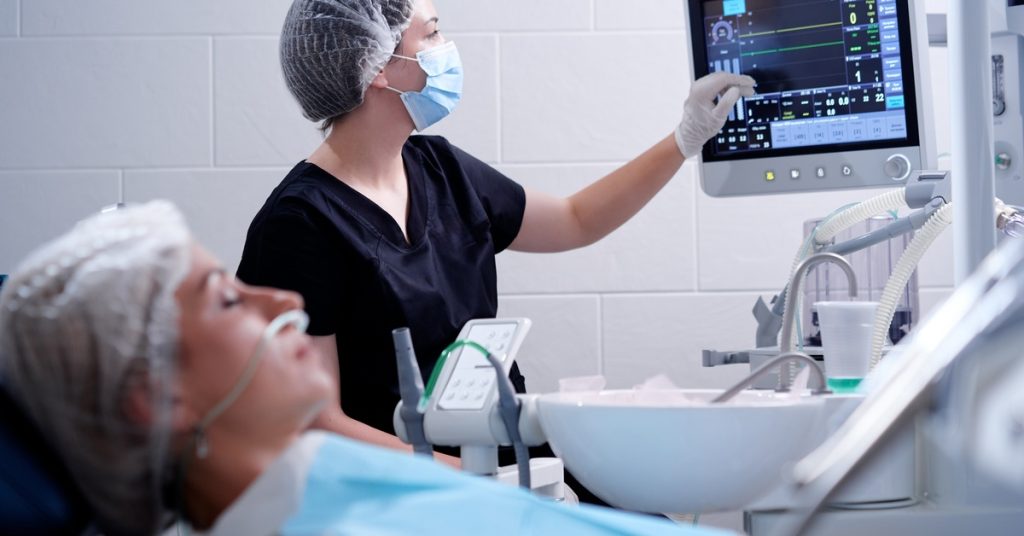
Once you’re prepped and seated, your endodontist works through a clear, structured sequence of steps. First, they apply a topical numbing agent to the treatment area before administering a local anesthetic injection. The goal is to make sure the tooth and surrounding tissue are fully numb before any sedation takes effect.
From there, the sedation is introduced based on the method being used. The endodontist or a trained team member monitors your vitals continuously throughout the procedure, adjusting as needed to keep you comfortable and stable. Once you’re properly sedated and numb, the actual endodontic work begins. This includes accessing the inside of the tooth, removing infected or damaged pulp tissue, cleaning and shaping the root canals, and sealing the tooth to prevent future infection. The sedation runs throughout the entire procedure to keep you relaxed and free from pain or anxiety.
How Your Body Feels Under Nitrous Oxide
Nitrous oxide is inhaled through a small mask placed over your nose. It takes effect within a few minutes and produces a state of calm relaxation without putting you fully to sleep.
You stay conscious and can respond to questions, but you feel at ease and detached from any anxiety you came in with. Many patients report a mild floating sensation or tingling in their hands and feet. Your pain perception is low because nitrous oxide raises your threshold for discomfort. When the mask is removed at the end of the procedure, the effects wear off quickly, usually within minutes, which is why most patients who receive nitrous oxide alone can drive themselves home.
How Your Body Feels Under Oral Conscious Sedation
Oral conscious sedation involves taking a prescribed sedative medication by mouth before your appointment. By the time you’re in the chair, the medication has already started working.
You remain conscious and can communicate, but you feel deeply relaxed and drowsy. Most patients have little to no memory of the procedure afterward, which is a normal and expected effect of the medication. Your reflexes slow down, your body feels heavy, and your sense of time passing becomes distorted. You won’t feel pain, and you won’t feel anxious. Because oral sedation stays in your system for several hours after the appointment, you’ll need that previously arranged ride home, and you should plan to rest for the remainder of the day.
How Your Body Feels Under IV Sedation
IV sedation is administered directly into a vein, which means it works faster and allows your endodontist to control the sedation level in real time. You move into a deeper state of relaxation than oral sedation produces, though you’re still technically conscious.
Most patients under IV sedation have no memory of the procedure at all. Your body’s responses slow, and you feel completely disconnected from what’s happening in the room. Your endodontist monitors your oxygen levels, heart rate, and blood pressure throughout the entire appointment. IV sedation is commonly used for longer or more complex procedures, or for patients with significant dental anxiety. Recovery takes longer than nitrous oxide or oral sedation, so you’ll need a driver and should plan to take it easy for the rest of the day.
What Happens to Your Body After Sedation
Once the procedure is done and the sedation wears off, your body goes through a short recovery period. What you experience depends on the type of sedation you received, but some general effects are common across all types:
– Drowsiness or grogginess, especially after oral or IV sedation
– Mild nausea in some patients, most often tied to IV or oral sedation
– Temporary difficulty with coordination or concentration
– Soreness or tenderness in the treated area as the local anesthetic wears off
– Dry mouth or a slightly sore throat if you received IV sedation with oxygen support
– A sense of time loss or fuzzy memory of the appointment, which is completely normal
These effects are temporary. Most patients feel back to themselves within 24 hours, and many feel better by the following morning.
Getting Back to a Healthy Smile
Now that you understand how your body responds to endodontic sedation, hopefully you feel more prepared, and less worried about, your upcoming procedure. It’s far less intimidating than it sounds.
If you have a referral for a procedure like a root canal, reach out to Commonwealth Endodontics, a team of dental professionals located in central Virginia. We can evaluate your case, walk you through your options, and get you back to feeling healthy.
Our sedation endodontists use proven techniques to make your procedure as painless as possible. We offer multiple sedation options depending on your procedure and your level of comfort, including nitrous oxide, oral conscious sedation, and IV sedation. Don’t let fear of sedation deter you from getting life-changing dental care. Contact us today and we’d be happy to answer any questions you might have about endodontic sedation or your upcoming procedure.